

The importance of a professional website for recruitment consultants cannot be underestimated. In an industry that relies heavily on trust, credibility and expertise, a recruitment consultant’s own website serves as a calling card and the first point of contact for potential clients and candidates. But what exactly makes for a good website for a recruitment consultant? Below, we highlight the most important aspects.
Clear positioning and targeting of the audience
One of the key functions of a website is to communicate your company’s positioning. What sets your recruitment consultancy apart? Do you specialise in a particular sector or target group? These unique selling points should be highlighted prominently to set you apart from the competition. A catchy slogan or mission statement on the homepage that reflects your expertise and values can help with this.
Tip: Use clear language that is tailored to your target audience. Avoid technical jargon that might put off potential customers or applicants.
Attractive and modern web design
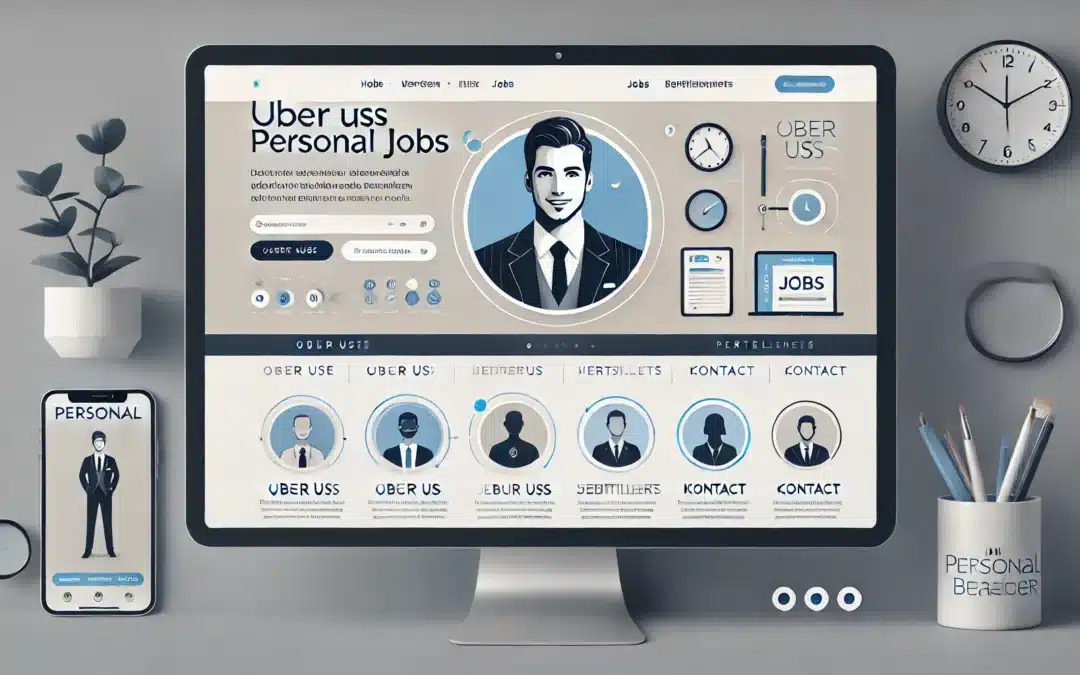
Your website’s design is the first impression visitors get. It should be modern, professional and tailored to your target audience.
- Responsive design: Your website should display perfectly on all devices (desktop, tablet, smartphone).
- Intuitive navigation: Visitors need to be able to find the information they are looking for quickly and easily. A clear menu structure and logical page layout are essential.
- Visual elements: High-quality images, videos or graphics can break up complex content and make it easier to understand.
Authentic content
Content is at the heart of every website. Your content should not only be informative, but also authentic. Show who is behind your business and build trust in the process.
- Team introduction: Potential customers and applicants want to know who they’re dealing with. Professional portrait photos and brief descriptions of team members help to build a sense of connection.
- Success stories: Testimonials and case studies show how you have helped other companies or job applicants.
- Blog: A blog allows you to showcase your expertise in HR consultancy whilst also boosting your visibility on search engines.
SEO optimisation
A professional website alone is not enough if potential customers or job applicants cannot find it. This is where search engine optimisation (SEO) comes into play.
- Keyword strategy: Research relevant search terms used by your target audience and incorporate them strategically into your content.
- Technical SEO: Fast loading times, mobile optimisation and clean URL structures are crucial for a good ranking.
- Local SEO: If you operate mainly at a regional level, you should optimise your website for local search queries, for example by including your location in your keywords.
User-friendliness and interactivity
A good website is characterised by a high level of user-friendliness and interactive features. Offer functions that provide added value for visitors:
- Contact details: Make sure that prospective customers can contact you easily, for example via a contact form or a clearly visible telephone number.
- Job applicant portal: An intuitive job application portal simplifies the process and enhances the user experience.
- Live chat: A live chat or chatbot can answer initial questions straight away and make it easier to get in touch.
Privacy Policy and Legal Notice
Under the GDPR, data protection and legal information are essential on your website. A missing legal notice or an inadequate privacy policy can not only lead to legal consequences, but also undermine your visitors’ trust. Ensure that these details are correct and easily accessible.
Integration of social media
Social media plays an important role in employer branding and in reaching out to potential candidates. Link your social media channels to your website to share content across platforms and increase your reach. Widgets or social media feeds on your website can add further value.
A professionally maintained Google Profile (e.g. Google My Business) is just as crucial. It ensures that your business appears in local search results and provides potential customers or applicants with key information at a glance, such as your address, telephone number, opening hours and reviews. Positive reviews on Google also boost your credibility and attract more prospective customers.
Tip: Update your Google profile regularly and actively ask satisfied customers or applicants for reviews.
Conclusion
A good website for a recruitment consultant requires a combination of professional design, authentic content, technical optimisation and user-friendliness. It is not only your digital business card, but also an important tool for attracting and retaining clients and candidates in the long term. Social media and a well-maintained Google profile are essential additions to strengthen your online presence. Invest time and resources in designing and maintaining your website – it will be well worth it!