


Aptitude testing
Discover the true potential for and within your business
Are you considering using aptitude testing for your company to support the recruitment process or to strengthen your existing team –
Let’s analyse your current situation and explore the options available.
Dr Armin Betz would be happy to take the time to discuss the options available to you in detail.
Give us a call or book an appointment!

What we offer
Using HR Consult Group AG’s aptitude assessment, we identify your employees’ potential and relate this to their respective occupational groups. Their results are compared against over 100 best-practice groups using a multi-profile matching process.
- Candidate assessment through potential analysis
- Underpinning the recruitment decision
- Mapping of job-related best-practice profiles
- Strengths and Weaknesses Analysis
- Scientifically sound and DIN-certified
Book an appointment now!
From requesting an appointment to the interview
Would you like us to get in touch with you?
Please let us know when you would like us to call you back.
Would you rather ask us directly instead of reading this?
Would you like to have an in-depth telephone conversation to analyse your current situation?

Aptitude testing
Always tailored to you and your business
To strengthen your team
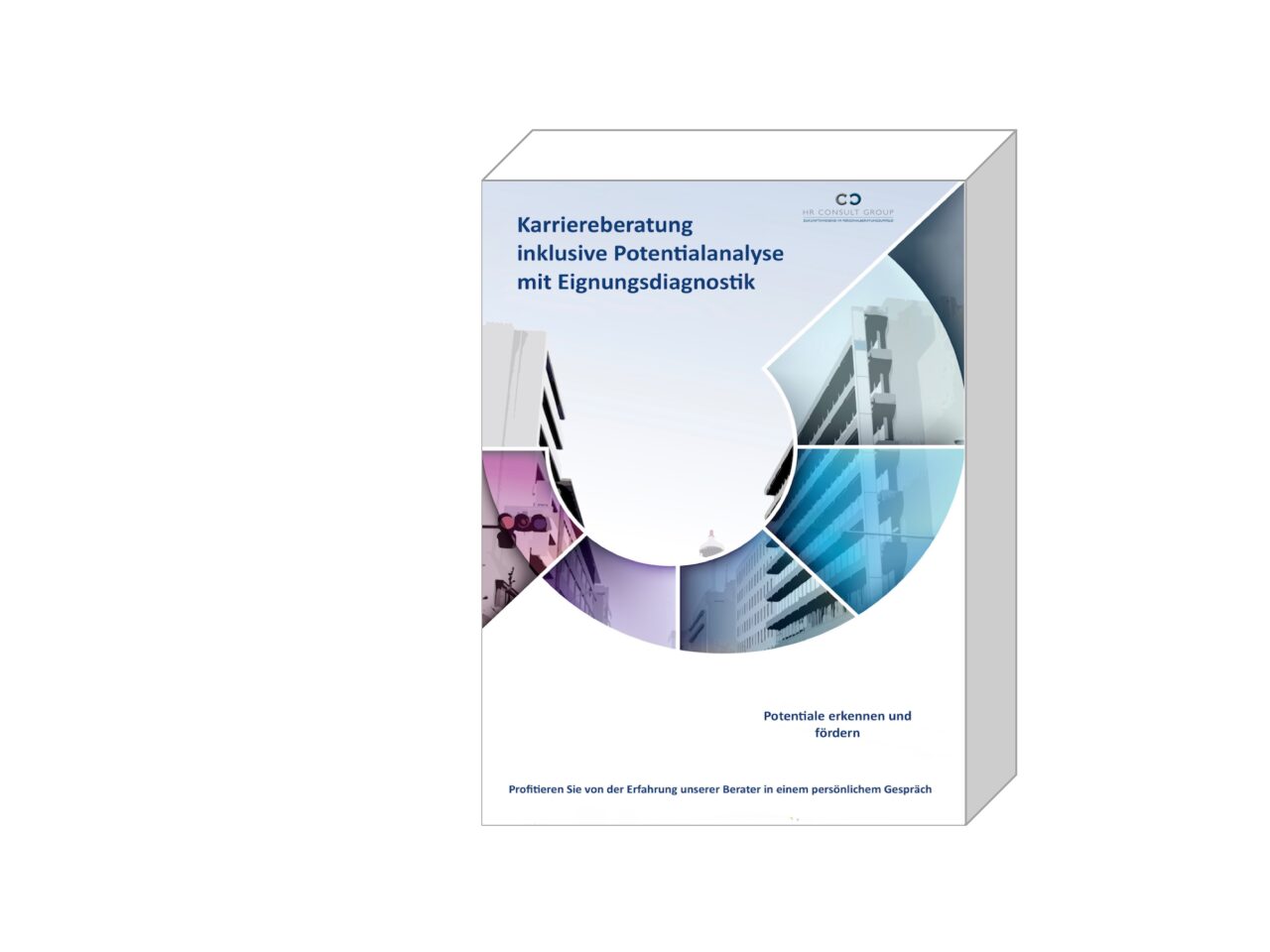
Identifying and developing the potential of your existing staff
- How does aptitude testing work? An explanation of the system
- Each of your staff members will complete their own individual aptitude assessment.
- The self-assessment takes about 30 minutes. It is important that you set aside the time for this and answer the questions calmly and truthfully.
- During a face-to-face meeting with your adviser and the staff, the results will be discussed, analysed and interpreted together.
Strengthen your team and recognise the individual potential of each member!
Let’s analyse your current situation and explore the options available.
For potential new employees
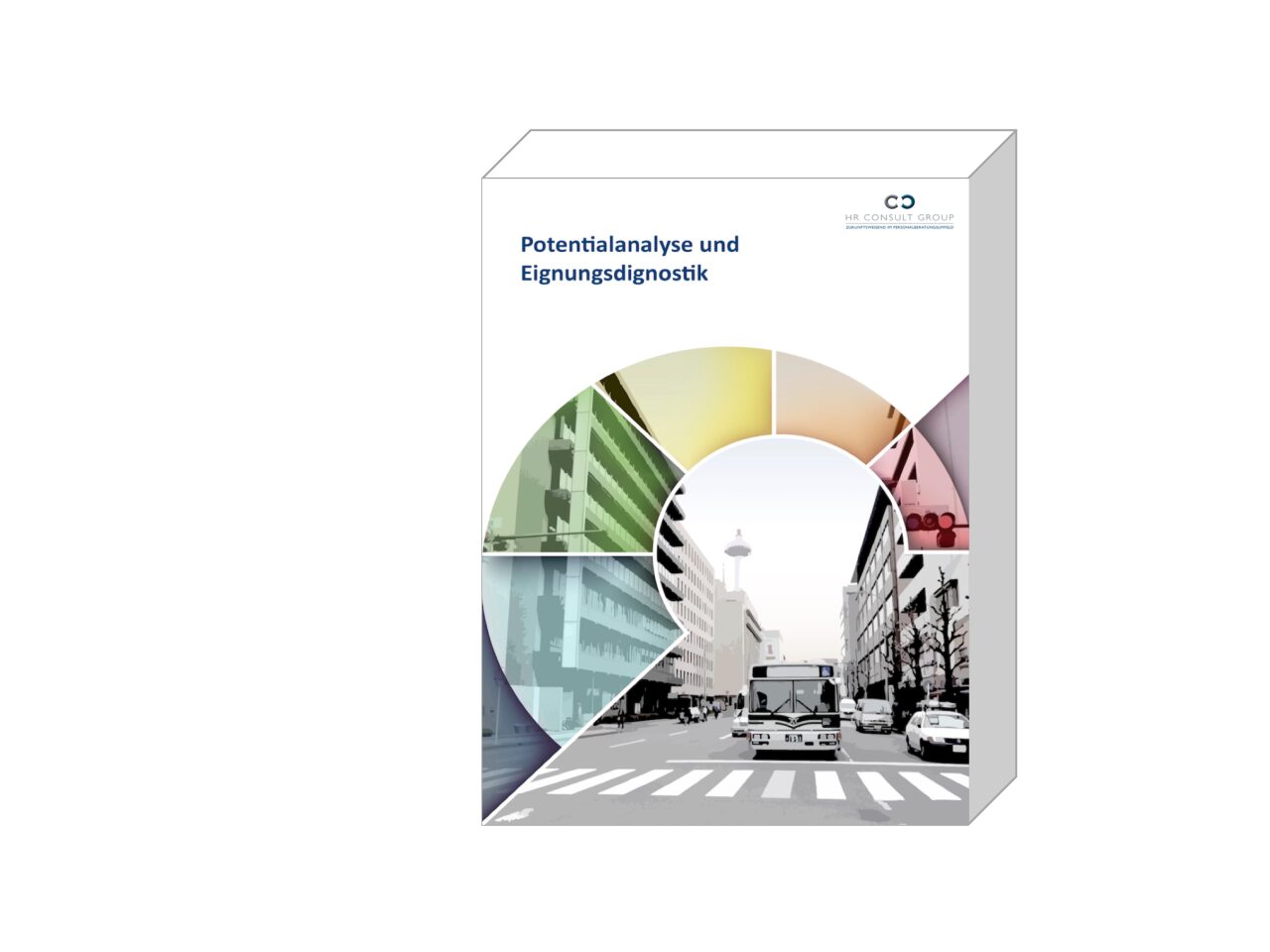
Ensure your organisation’s recruitment process runs smoothly and benefit from our consultants’ expertise during a face-to-face meeting.
- How does aptitude testing work? An explanation of the system
- Each of your candidates will complete their own individual aptitude assessment.
- The self-assessment takes about 30 minutes. It is important that you set aside the time for this and answer the questions calmly and truthfully.
- During a face-to-face meeting with your consultant and the candidates, the results will be discussed, analysed and interpreted together.
You are considering using aptitude testing for your company to support the recruitment process.
Let’s analyse your current situation and explore the options available.
Interested?
If you are interested
- to carry out an aptitude assessment yourself,
- would like to use aptitude testing to strengthen your team,
- to be able to assess potential new employees more effectively, or
- simply want to find out more about aptitude testing
Please contact Ms Diana Diewald at +49 (0)871 430 888-10,
or you are also welcome to contact us by email at d.diewald@hr-consult-group.de.
Please contact us
Matching soft skills
“We HIRE based on skills and qualifications, and FIRE based on behaviour"
(Nathan Chanesman)
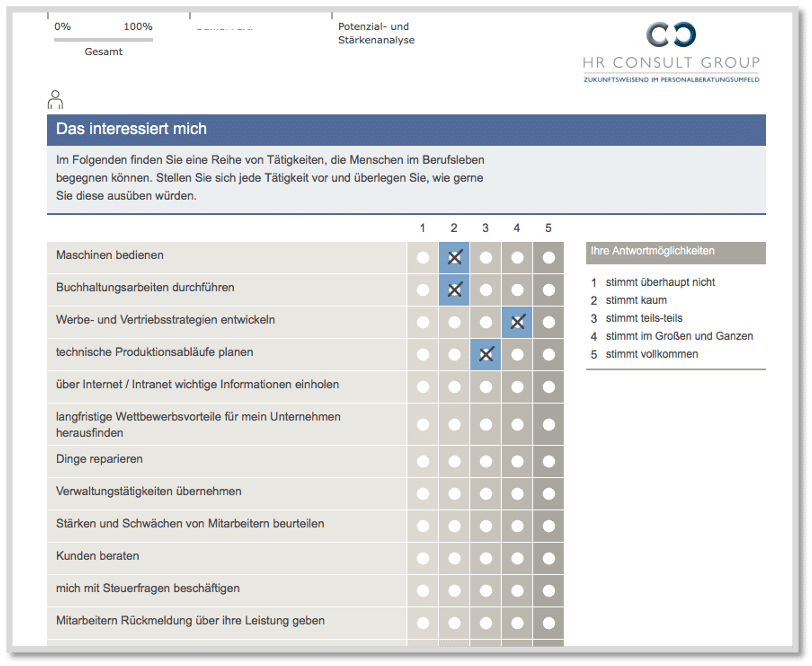
It is not just technical knowledge, referred to as Hard facts – namely, work experience, education, languages and industry knowledge – but above all Soft skills – such as career interests, motivations, values and social behaviour – are crucial to performing a role successfully. How can these soft skills be made measurable and therefore comparable, and how can they be digitised?
Use of online aptitude assessment methods.
The use of aptitude testing provides a scientifically sound method for measuring the levels of personality traits and social skills, thereby enabling an objective comparison of alternative candidates in terms of soft skills.
Just as we compare school report marks or written assessments and evaluations, it is now also possible to measure soft skills using mathematical and digital methods and thus present them in a comparable way.
Matching soft skills
“We HIRE based on skills and qualifications, and FIRE based on behaviour"
(Nathan Chanesman)
It is not just technical knowledge, referred to as Hard facts – namely, work experience, education, languages and industry knowledge – but above all Soft skills – such as career interests, motivations, values and social behaviour – are crucial to performing a role successfully. How can these soft skills be made measurable and therefore comparable, and how can they be digitised?
Use of online aptitude assessment methods.
The use of aptitude testing provides a scientifically sound method for measuring the levels of personality traits and social skills, thereby enabling an objective comparison of alternative candidates in terms of soft skills.
Just as we compare school report marks or written assessments and evaluations, it is now also possible to measure soft skills using mathematical and digital methods and thus present them in a comparable way.
What sets the best in a particular profession apart?
The high achievers within a particular occupational group are almost identical in terms of their personality traits.

Key findings
1. The high achievers within a particular professional group are almost identical in terms of their personality traits and soft skills. Each standard or best-practice profile forms its own specific picture, typical of that professional group.
2. The 10 key criteria of a standard or best-practice profile are derived from the group’s own findings. These are the criteria that show the least variation. This is where the degree of agreement is highest.
From professional requirements to a best-practice profile
How to create a best-practice profile using aptitude testing.
Practical implementation
Sample analysis
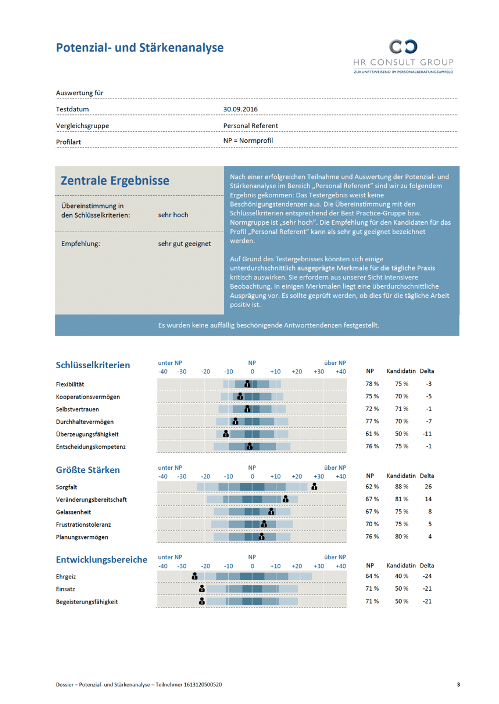
Modern online aptitude testing compares candidates with similar profiles from the relevant occupational group.
Individual results are compared with a benchmark group specific to the profession and role, and enable
the validation of strengths and potential.
Recommendations This makes it possible to weigh up the pros and cons.
During a 30–45-minute online assessment, candidates carry out a self-assessment.
A test on its own is of only limited value; it is only by comparing or contrasting the results with the benchmark for the comparison group that it is possible to draw well-founded conclusions about suitability and the likelihood of success.
Here, too, digital capture and processing are essential.
Practical implementation
Sample analysis
Modern online aptitude testing compares candidates with similar profiles from the relevant occupational group.
Individual results are compared with a benchmark group specific to the profession and role, and enable
the validation of strengths and potential.
Recommendations This makes it possible to weigh up the pros and cons.
During a 30–45-minute online assessment, candidates carry out a self-assessment.
A test on its own is of only limited value; it is only by comparing or contrasting the results with the benchmark for the comparison group that it is possible to draw well-founded conclusions about suitability and the likelihood of success.
Here, too, digital capture and processing are essential.
Standards & Best Practice Profiles
It is only by comparing candidates within the same occupational group that a judgement can be made about the quality of the characteristic.
Aptitude-
diagnostics
Aptitude assessment is a collective term for methods used to measure work-related skills and behavioural tendencies. In principle, aptitude assessment is intended to enable as accurate a prediction as possible of a person’s likelihood of success or job satisfaction.
„We HIRE based on skills and qualifications, and FIRE based on behaviour“
(Nathan Chanesman)
For more than 10 years, the
HR Consult Group AG continuously updates over 100 standard and best-practice job profiles on a scientific basis.

Let’s have a chat!
Whether you are considering using aptitude testing for your company to support the recruitment process, or whether You are looking to change career direction and want to realise your full professional potential – Let’s analyse your current situation and explore the options available.
Dr Armin Betz would be happy to take the time to discuss the options available to you in detail.
Give us a call or book an appointment!
Your contact person
Dr Armin Betz founded the company in 1994 and has been a member of the Executive Board since 1996. HR Consult Group AG. His focus is on building networks and collaborative models, as demonstrated on a daily basis through the PERSONAL TOTAL and SENATOR brands. He supports the ongoing development of systems and processes within the HR consultancy sector. Many of the innovations developed by HR Consult Group AG have now become standard practice in the HR consultancy sector. The knowledge the group has accumulated over the past decades is distilled into training courses and seminars, enabling comprehensive and well-founded Training to become a recruitment consultant, which is certainly unique in Germany. With more than 250 successfully trained recruitment consultants, this constitutes a USP within the German recruitment consultancy sector.
He has now been working in HR consultancy for more than 25 years and is therefore one of the most experienced HR consultants in Germany. His consultancy work focuses on the automotive and mechanical engineering sectors, particularly e-mobility and renewable energy. The areas of human resources and Aptitude testing round off his profile as a consultant.
For several years, he has been working as a visiting lecturer at the University of Applied Sciences in Landshut, specialising in aptitude assessment and the latest developments in this field. He also works as a lecturer at the Fresenius University of Applied Sciences in Munich, where he teaches on topics such as the latest HR trends, state-of-the-art recruitment methods and potential analyses.
His PhD in the field of aptitude assessment underscores his expertise in these areas. His thesis focuses on identifying and demonstrating typical personality traits among engineers, as well as defining areas for development to ensure a successful career. These are covered in the book „Aptitude Testing in Practical Application“ scientifically derived and presented.
General and Fundamental Information
Assessment is a collective term for methods used to measure competencies and behavioural tendencies using
Career relevance. In principle, aptitude testing is intended to provide as accurate a prediction as possible of an individual’s likelihood of success or job satisfaction.
The HR Consult Group’s Potential and Strengths Analysis is a testing procedure developed on a scientific basis to systematically identify personality traits relevant to one’s career and success, and to determine the extent to which these traits are present. In the
A comparison with position- and job-specific reference groups can provide insights into the suitability of the role and
The probability of success for the people tested can be estimated with a high degree of accuracy. The test is based on a
Candidates’ self-assessment with regard to a wide range of situations encountered in everyday life and at work.

Why aptitude testing?
Costs of a poor recruitment decision – example:
Cost of staff recruitment: approx. 10,000 euros
Preparation for the selection process, interview dates,
Assessment centres, etc.
Separation following training: approx. 15,000 euros
Termination after the probationary period: approx. 35,000 euros
Another vacancy, potential loss of customers
Break-up after a year: around 100,000 euros
vacancy once again
Loss of established customer relationships, customer erosion
regional competitive disadvantage, etc.
The more important the role, the higher the cost of a bad hire!
Why aptitude testing?
Costs of a poor recruitment decision – example:
Cost of staff recruitment: approx. 10,000 euros
Preparation for the selection process, interview dates,
Assessment centres, etc.
Separation following training: approx. 15,000 euros
Termination after the probationary period: approx. 35,000 euros
Another vacancy, potential loss of customers
Break-up after a year: around 100,000 euros
vacancy once again
Loss of established customer relationships, customer erosion
regional competitive disadvantage, etc.
The more important the role, the higher the cost of a bad hire!
Reasons for aptitude testing
- Quick online process (approx. 30–45 minutes)
- In compliance with the AGG
- Results that are understandable and usable even by non-experts
- Setting a standard in staff appraisal
- In-house aptitude assessment expertise and development
- A further factor in assessing a candidate’s suitability
- Ensuring the selection process takes the candidate’s soft skills into account
- Early indications of potential shortcomings on the part of the candidate
- Extremely good value for money
- High value despite a minimal investment of time and money
- Maximum objectivity, reliability, validity and standardisation
- Scientifically recognised
Key criteria
What are the requirements? What must candidates absolutely fulfil in order to successfully meet the requirements of the role?
What personality traits / soft skills What determines whether a jobholder succeeds or fails?
Focus on a maximum of ten cross-disciplinary requirements relevant to the role holder’s success
Consequently, personality traits exhibiting the lowest degree of variation / range become the key criterion for the respective position or
a sector-specific standards or best practice group.
The key insight is that the key criteria for successfully fulfilling a role emerge naturally and do not need to be identified through laborious consultation processes with specialist departments and the HR department.
Creating a best practice profile
- Identification the most successful employees and the definition of success criteria (e.g. turnover, return on investment, etc.).
Establishment of a best-practice group comprising staff members and identification of the relevant, measurable characteristics. - Implementation the diagnostic aptitude tests (available online).
- Test result: Characteristics exhibited by successful employees → Definition of the best-practice profile.
- Provision the individual profiles of applicants through aptitude tests.
- Comparison comparison of actual values with the ideal profile, deviation analysis, and verification against BIG POINTS.
Aptitude testing as part of staff development
- Practical example
Staff development for technical trainees in an international group - Staff Development
Assessing trainees against the Best Practice Profile (BPP) for young engineers - Expert Report – Variance Analysis
Outline of individual strengths and areas for development - Areas for improvement
a confident manner, the ability to persuade, self-confidence, and the ability to take the lead and get things done - Areas of development Included in the training programme – content of the trainee programme:
Communication (persuasiveness, reasoning, etc.)
Sales (confident manner, proactive approach, commitment, initiative, etc.)
Self-management and time management (setting priorities, personal life, etc.)
The Origins of Aptitude Testing
You can download further information here regarding the aptitude assessment.

Definition of subject-specific and cross-curricular requirements
A key prerequisite for a satisfactory outcome of the potential and strengths analysis is a detailed assessment of the technical and non-technical requirements of the role – such as qualifications, knowledge, soft skills and career interests – as well as the broader context in which these operate, in order to define the „best fit“. To establish the highest possible degree of alignment between the „best fit“ and the individual, the candidate completes a self-assessment as part of the test covering a wide range of personality traits, which
is carried out in accordance with the highest quality standards in terms of objectivity, reliability, validity and standardisation.
Publication
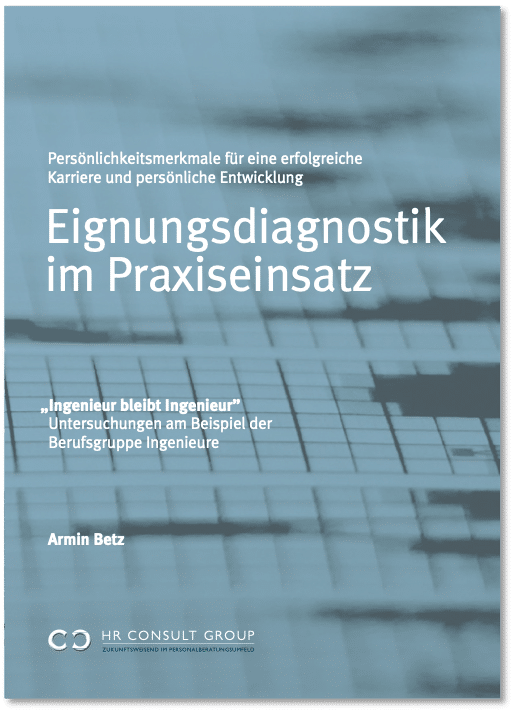
This book focuses on the following topics:
Identifying the typical personality traits of an engineer and defining areas for development to ensure a successful career.
The book provides a structured overview of personality traits and the methods used to assess them, and outlines the current state of the art in aptitude assessment. Furthermore, as part of this research project, existing aptitude assessment methods are explained and refined, test results are analysed, and the key characteristics of engineers are presented and summarised at various qualitative and quantitative levels. The key areas for development required for a successful career in the engineering profession are highlighted.
Order now!
If you are interested, you can order the book *Aptitude Testing in Practice* by Dr Armin Betz directly here.
Price: €39.90
Publication
This book focuses on the following topics:
Identifying the typical personality traits of an engineer and defining areas for development to ensure a successful career.
The book provides a structured overview of personality traits and the methods used to assess them, and outlines the current state of the art in aptitude assessment. Furthermore, as part of this research project, existing aptitude assessment methods are explained and refined, test results are analysed, and the key characteristics of engineers are presented and summarised at various qualitative and quantitative levels. The key areas for development required for a successful career in the engineering profession are highlighted.
Order now!
If you are interested, you can order the book *Aptitude Testing in Practice* by Dr Armin Betz directly here.
Price: €39.90
Potential analyses are a must for managers
When filling management positions, candidates expect to undergo aptitude assessment procedures.
CUSTOMER TESTIMONIALS









Managers expect recruitment consultancies to carry out aptitude assessments
More than half of candidates expect recruitment consultancies to carry out an aptitude assessment or potential analysis.